
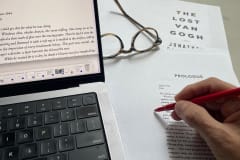
Crime Fiction Writing
Or why I write Crime Fiction, how it came to be, and questions you should never ask a crime writer.


If one more person says “I don’t read mysteries, but I love yours” or “I don’t read those kinds of books, but I read yours,” I am going to hit them in the face with a giant cow pie! My usual response is “So you never read “An American Tragedy” or “Crime and Punishment” or “Lolita?” For the record, I am only asked that question in the US where readers consider crime fiction a denigrated sub-genre. But I am never asked it in Europe.
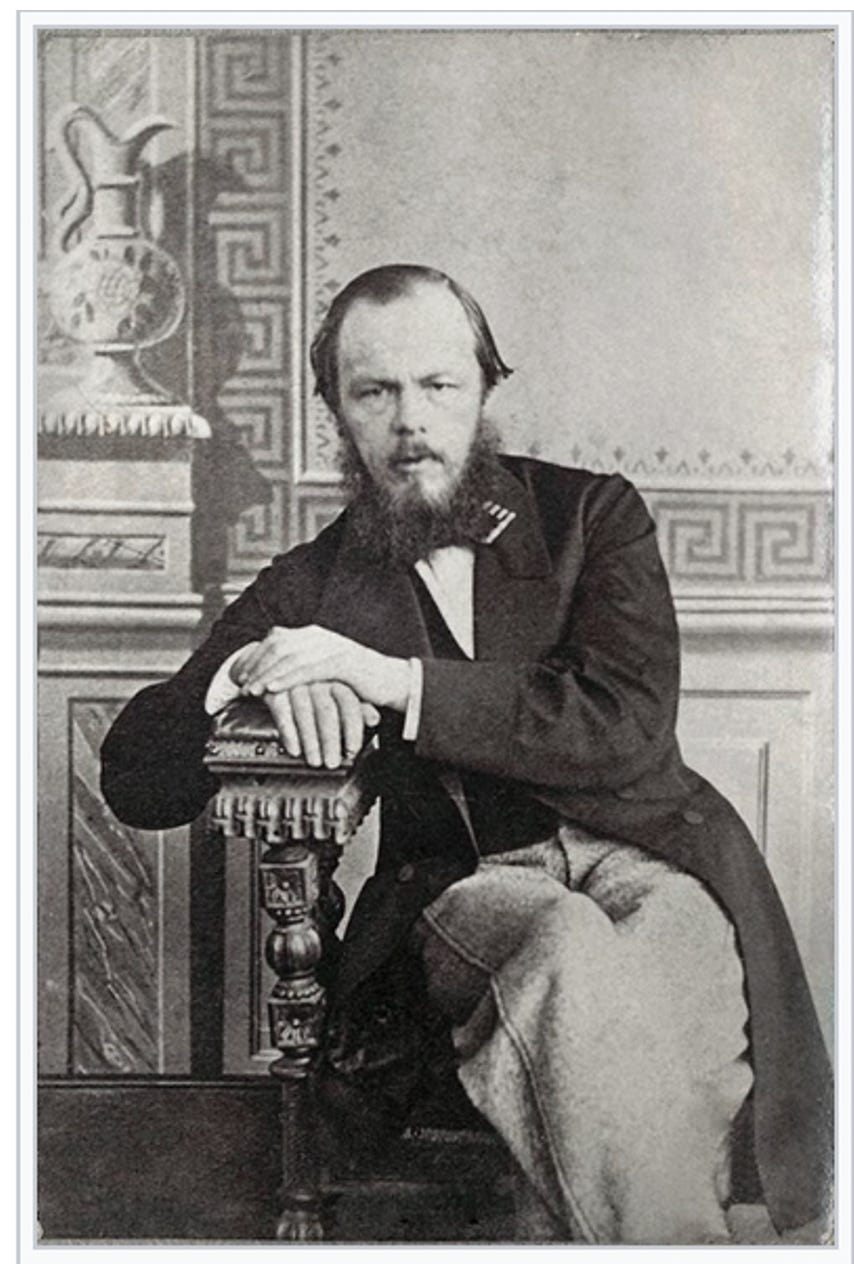
Recently, a well-known literary writer asked me if I would ever consider writing a literary novel. “You could,” he said, “I mean, you write well enough.” (Oh, do I? Gee, thanks.) Clearly, the writer thought he was giving me a compliment, though backhanded and condescending. I would never ask a literary writer if they would ever write a crime novel.
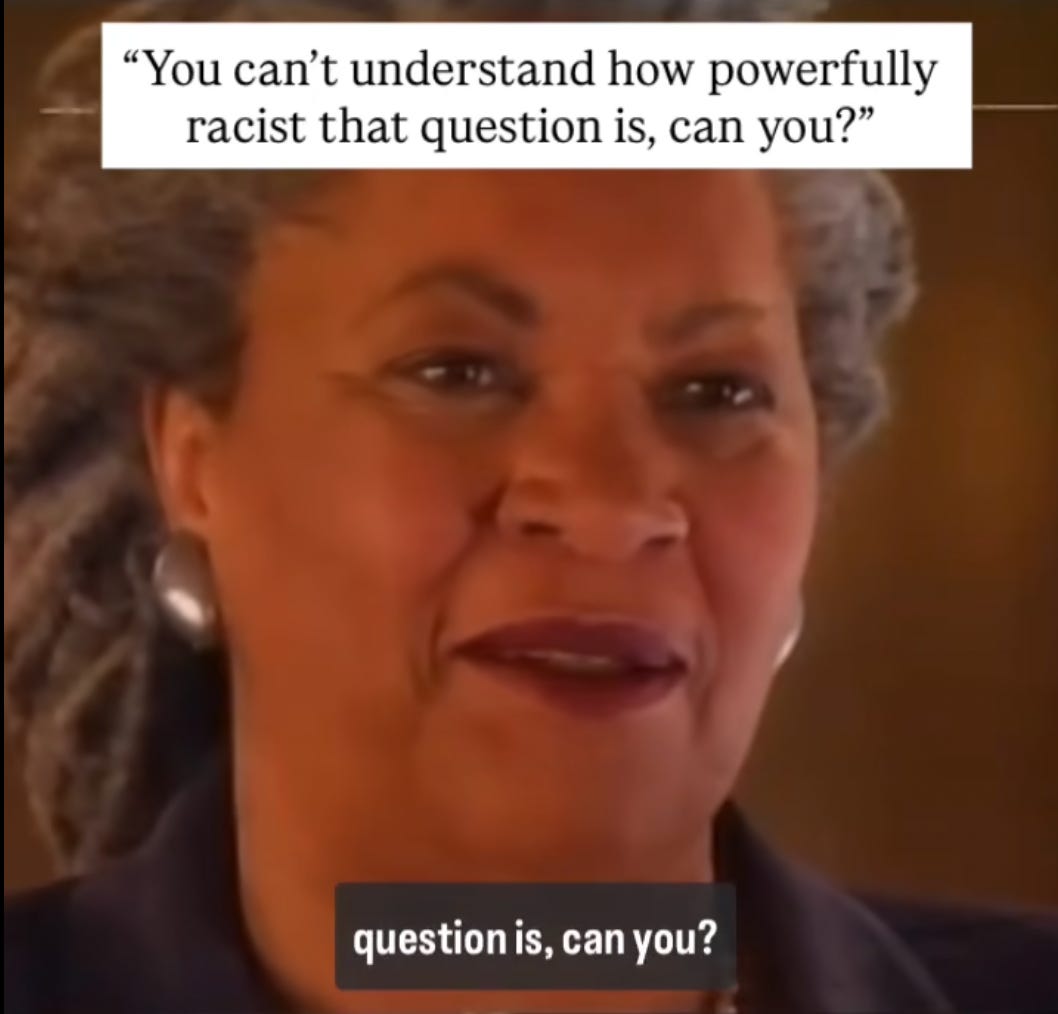
How about the audacity of the white interviewer who asked Toni Morrison if she would ever consider writing white characters? Morrison pointed out that the question was tacitly racist: “You would never ask a white writer when they might write about Black characters.”
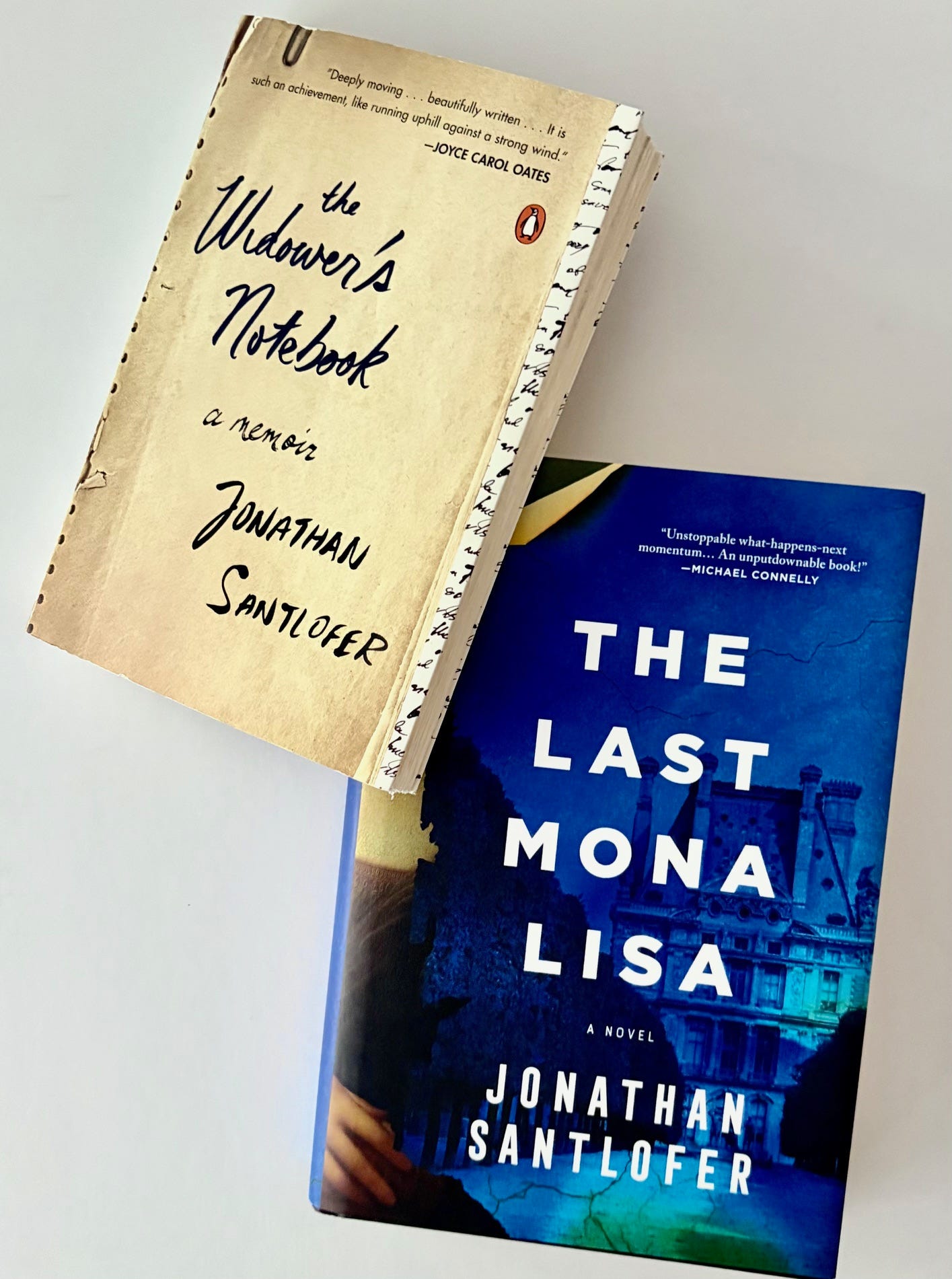
Here’s an annoying one I got just the other day. “You know, the writing in your memoir (“The Widower’s Notebook”) is so good and so much better.” Better than what? Better than the writing in my crime novels I suppose, but it’s simply not true. My writing is my writing, the same in my memoir as it is in anything I write. It’s the subject matter that’s different. One review of my memoir said it read like a thriller, something I had no idea I was doing, so perhaps it’s the way my brain is wired. People often mistake subject matter for style.
One more from a young(ish) poet at the arts retreat Yaddo: “I think plot is ridiculous!” Excuse me? Look, you may not be interested in plot and that’s fine (frankly, who needs you?) but to say plot is ridiculous only makes you seem like a jerk. Plot is extremely difficult and to be respected whether you care about it, pursue it, or like it. I should say, I adore Yaddo which has been an important breeding ground for all of the arts for well over 100 years but I have heard a lot of dumb remarks around that dinner table. Here’s another, this one from a writer who interrupted a conversation I was having with a filmmaker:
“I have no interest in film, none at all.”
“Really?” I said. “You never imagine a written scene visually?”
“No.”
“So you never think about cuts or writing from another angle or a different point of view in a cinematic way?”
“No, never.”
Wow. I am not reading his books!
Aside from the fact that film has taught me so much about writing (the subject of a forthcoming substack to be sure) I don’t find one art form or genre superior to another and that applies to all the arts, painting, writing, music, dance, performance, ballet, opera. (Sorry, Timothee, you’re a good actor but you should know better or at least try to be respectful of your fellow artists.)

I did not mean to start with a rant. Rather, how I began writing crime fiction which was almost accidental. I was living in Rome after a fire destroyed ten years of my artwork and having trouble painting and so, started a novel. (Hubris, I know, but I had been writing pieces for various art and travel magazines for some time). The novel was a thinly veiled account of a mid-career painter who loses all of his work in a fire. Hmm, ring any bells?
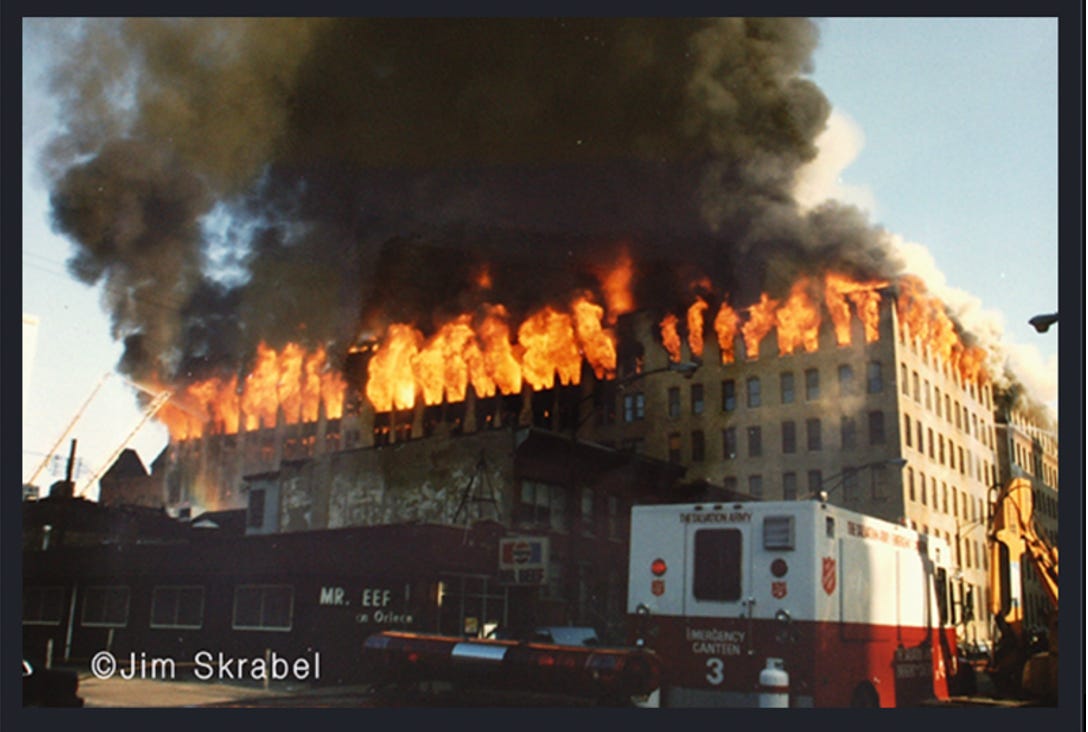
I had written about 200 pages at the Academy in Rome, but when I returned to New York and reread the pages, I hated them. The character felt entitled and whiny and worse, I didn’t care about him or his loss. So, I killed my literary stand-in over several pages in a rather gruesome though artful way, and voila, my first novel “The Death Artist,” was born. It was a good exercise and highly recommended: Kill yourself on the page - it’s painless, cathartic, and you still wake up in the morning!

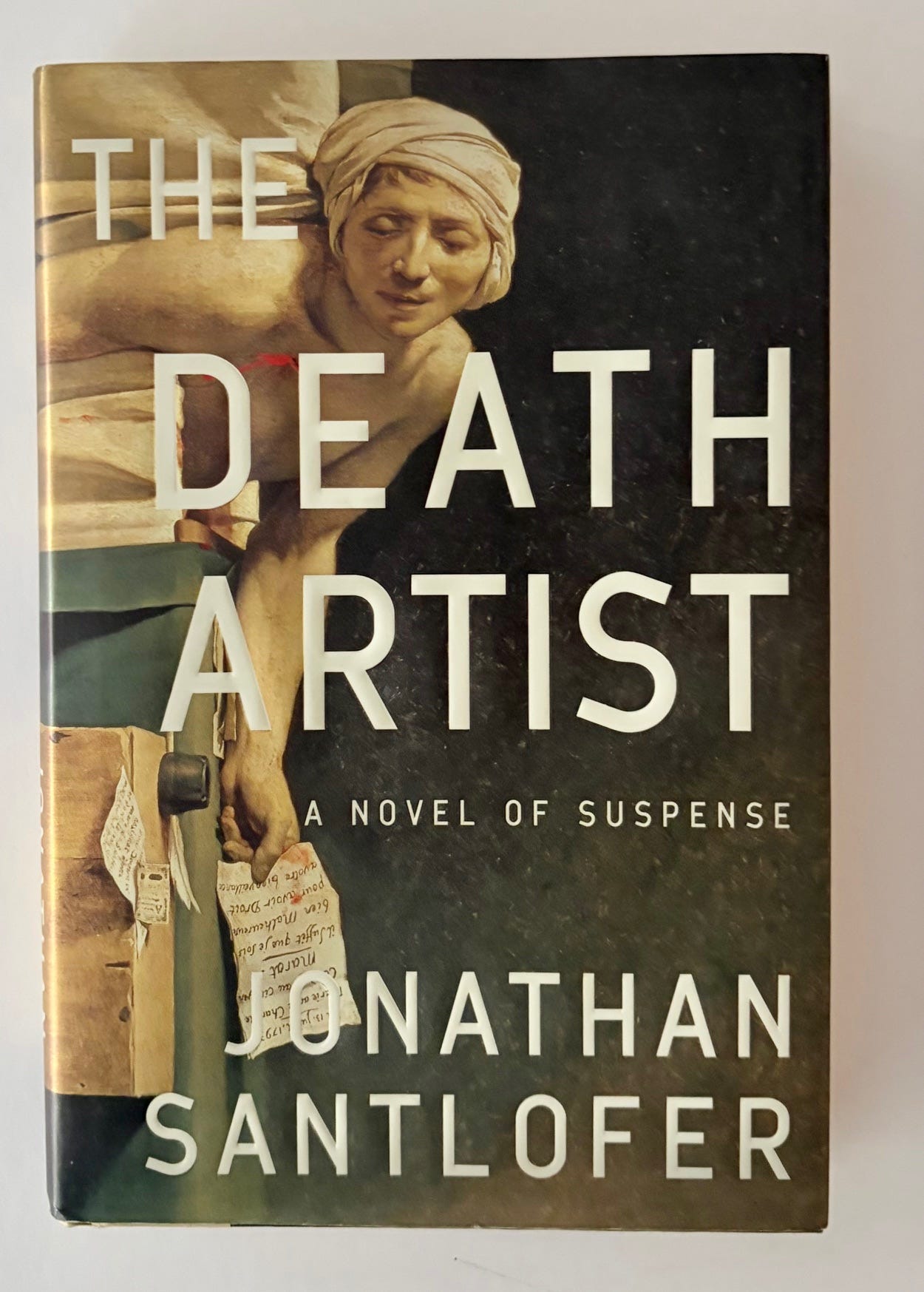
I should also say, the novel was written in private for almost a decade while I was trying to reconfigure my artwork and career. No one knew I was writing it except my wife.
Advice to new writers: Keep your work close, as most people will tell you that you’ll never do it, that selling a book is impossible, or will continually ask, “Hey, did you ever finish that book you were writing?” I think it should remain a private thing, protected until you sell it. Why put the unnecessary (and often negative) pressure on yourself? That will come later from critics. Just do the work. When I finished my novel (after 20 or more drafts and many years after I had begun), I showed it to two writer friends, both of whom liked it, one well enough to give it to their agent at ICM, who asked for a rewrite then took me on and sold the book in less than a week! Only then did I tell my friends and family that I’d written a novel. They were amazed. And it was amazing. For so many reasons.
First, because I was never one of those people who always wanted to write a book or read incessantly as a kid. In fact, I did not read at all. Reading was difficult for me. My favorite “books” were comic books because I could figure out what was being said from the pictures. I loved “Classic Comics” and horror comics like “The Vault of Horror.”
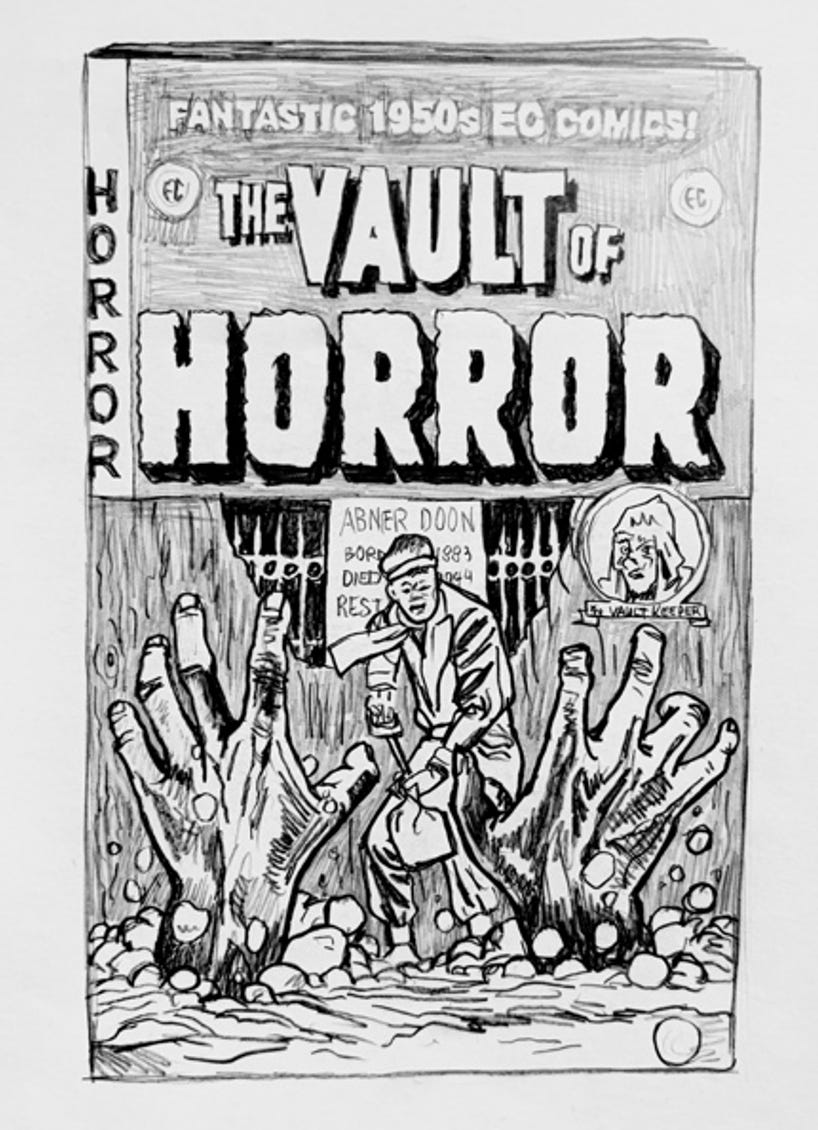
To this day, I think I’ve read “Robinson Crusoe” and “The Three Musketeers” but have only read the comic book versions.
It wasn’t until art school that I learned why I couldn’t read. It was during the first week of my freshman drawing class. My instructor asked why I drew the way I did (with both hands simultaneously). The question surprised me. “I’m just recreating the image, bringing together the two halves I see.” He found this interesting and suggested I talk to someone in the reading clinic. That’s how I learned I had slight dyslexia but enough to make reading a challenge. A therapist gave me exercises that combined drawing letters and words while saying them aloud, some that were purely visual, others with music. I liked them all and over time, learned to read, and at seventeen the magical world of books opened up for me.
One reason I love crime fiction is that it tackles BIG moral issues like good versus evil (and if there was ever a time). On the surface, my forthcoming novel “Ten Perfect Guests” appears to be a story about a bunch of spoiled brats getting their due. And that’s somewhat true, but they are also just people, deeply flawed, but if you read long enough you discover why each of them is the way they are and why. Underneath the mystery and mayhem, it’s also a story about greed and what it does to people.
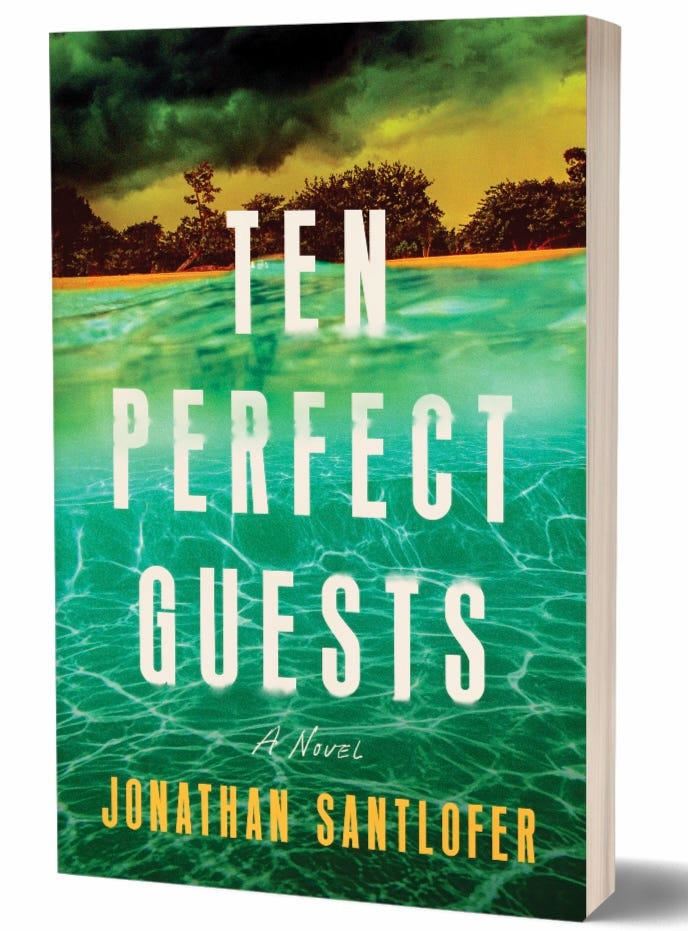
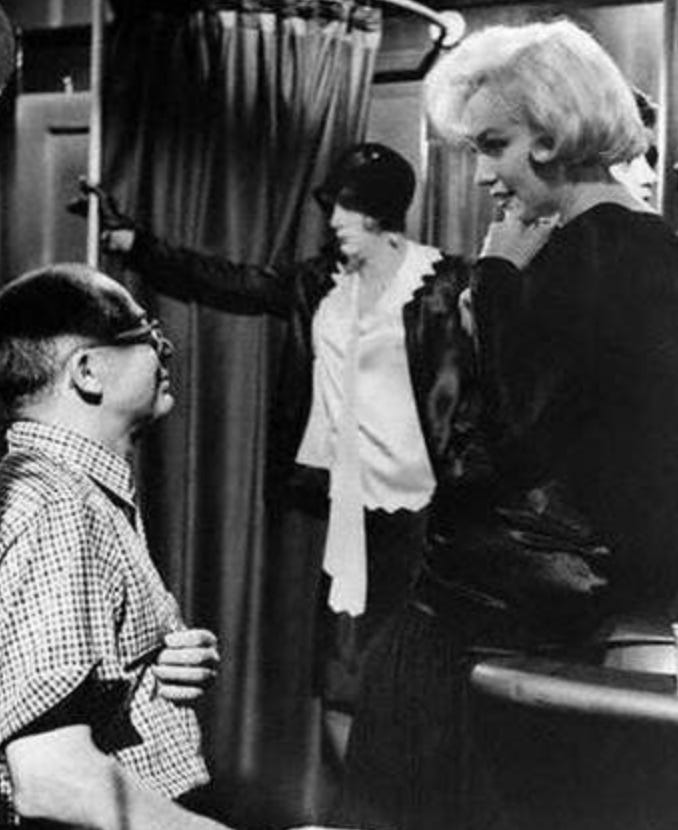
I like to write about something serious in the guise of fun and/or entertainment. The great filmmaker and screenwriter, Billy Wilder, said the best way to present difficult subject matter was by entertaining the audience. He often encapsulated his philosophy, "If you're going to tell people the truth, be funny or they'll kill you"
There’s a lot more to say about crime fiction, it’s joys and pleasures though please do not call it a guilty pleasure, another irksome phrase (a guilty pleasure is eating a candy bar when you know you shouldn’t or worse, having that second candy bar when it’s no longer even pleasurable.)
I recently read a crime novel by a well-known literary writer (Well, half the novel) and though the language was beautiful, the book was a complete dud without an engine to drive it or keep the reader turning pages. There’s a reason we call certain books page-turners, but doesn’t every author want the readers to turn the page?
When I gave up on the aforementioned unnamed novel, I thought, This guy should have taken classes at Crime Fiction Academy, the crime writing program created by Noreen Tomassi and me at the Center for Fiction. A terrific program we kept going for several years. Many of its students have gone on to publish their own successful stories and novels and I am proud of every one of them! I must say, I miss teaching crime writing, and I miss the students, who kept me honest.
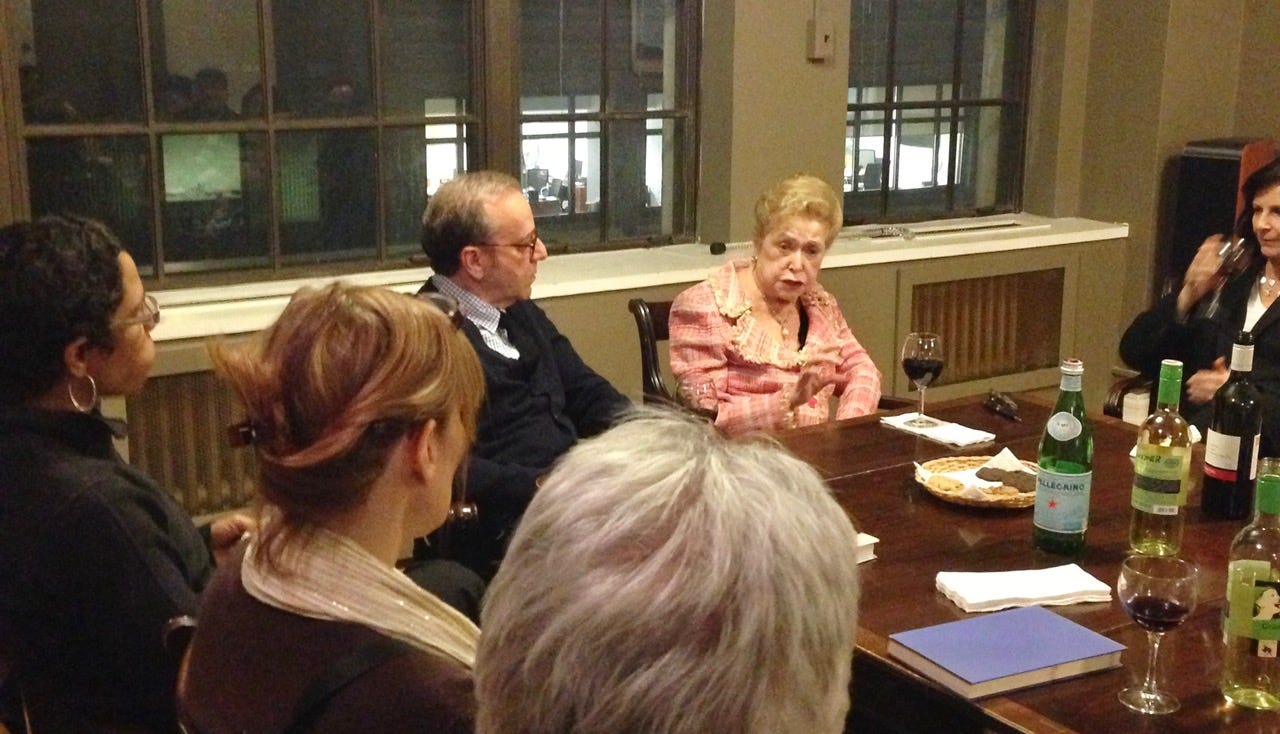
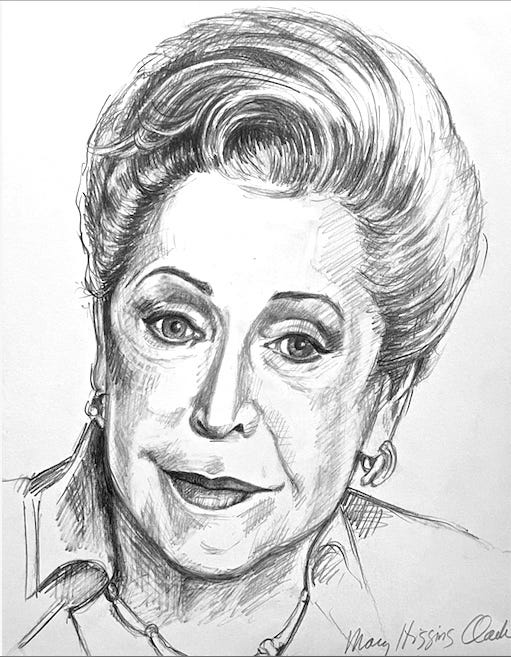
Teaching crime fiction is like teaching any writing though crime fiction does have a narrower spine, story is important, and questions need to be answered or the readers are going to find you and let you know just what you did wrong! But it’s still about good writing and interesting characters and learning to use language effectively and expanding your voice. The fact is, if you can write a good crime novel, you can write just about anything!
To preorder “Ten Perfect Guest” https://www.amazon.com/Ten-Perfect-Guests-Jonathan-Santlofer/dp/1464234809
Yeah.
Great post. Every good book is a mystery, really.